With a painful heart I write this blog as the emotional indiscipline alone among the political heavy weights gradually demolished all hopes and the world is limping slowly to an abysmal depth.i invite my regular viewers to share this blog and send their comments
When Faith is Misread and Power Misused: Rebuilding Hope in a Confused World
Category
Society | Politics | Economy | Peace & Human Values | Global Affairs
Introduction: A World ,at the Crossroads
We are living in an era where humanity has reached extraordinary heights in science, communication, and technological progress. Yet, paradoxically, the moral compass guiding societies appears increasingly fragile. Misinterpretation of religious thoughts, irrational and ego-driven political leadership, nationalism turning into cult-like fervor, and a stubborn refusal to compromise have collectively pushed the world toward instability. Ceasefires are declared but rarely trusted. Peace talks are initiated but seldom sustained. Diplomacy exists, yet suspicion dominates.
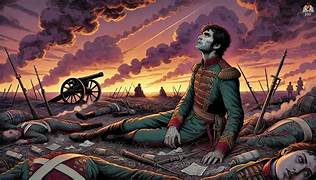
World at the cross roards illutration
At the bottom of this fragile pyramid stands the common person — the farmer, laborer, daily-wage worker, unemployed youth, and the hungry child. For them, ideological battles mean empty plates. Political rivalry means lost livelihoods. Economic instability means lost dreams. The world debates power, but the poor struggle for survival.
This blog examines how misinterpretation of faith, egoistic leadership, mistrust, and dictatorship tendencies are creating instability — and more importantly, how humanity can rediscover a path toward stable peace, economic balance, and social hope.
Misinterpretation of Religious Thoughts: When Faith Becomes Division
Religion, in its purest form, is a moral guide. It teaches compassion, restraint, humility, and coexistence. Yet history repeatedly shows that religion, when misinterpreted, becomes a powerful tool for division.
When sacred texts are read selectively, stripped of context, and weaponized for political or social control, faith loses its essence. Instead of guiding humanity toward peace, it becomes a justification for conflict. Leaders exploit religious sentiments to mobilize masses, polarize societies, and maintain power.
This misinterpretation often results in:
Us vs. them mentality
Religious superiority complexes
Justification of violence
Suppression of dissent
Emotional manipulation of vulnerable populations
When religion becomes identity politics, rational thought collapses. Dialogue disappears. Compassion fades. Humanity is replaced by ideological rigidity.
True religious thought encourages questioning, self-reflection, and kindness. Misinterpretation replaces these with blind obedience and hostility. The consequence is long-term mistrust between communities, which makes stable peace nearly impossible.
Ceasefire Without Trust: Temporary Silence, Not Peace
Ceasefires often create headlines, but rarely create harmony. A ceasefire without trust is like building a house on sand. The guns fall silent, but suspicion continues. Soldiers retreat, but hatred remains. Negotiations begin, yet intentions are doubted.
This pattern repeats globally:
Temporary agreements
Violations within weeks
Accusations and counter-accusations
Return to hostility
Peace requires more than silence. It requires:
Mutual respect
Transparent communication
Accountability
Economic cooperation
Cultural exchange
Without these, ceasefires become political tools rather than genuine steps toward reconciliation.
The greatest victims of fragile ceasefires are civilians. They return to rebuild homes, reopen shops, and send children to school—only to face renewed conflict. Their hopes are repeatedly crushed.
Irrational and Egoistic Leadership: The Biggest Obstacle to Peace
One of the most dangerous threats to stability is ego-driven leadership. When leaders prioritize personal pride, political dominance, or ideological superiority over human welfare, conflict becomes inevitable.
Egoistic leadership shows certain characteristics:
Refusal to compromise
Ignoring expert advice
Emotional decision-making
National pride over human life
Suppression of dissent
Overemphasis on military strength
Such leadership thrives on confrontation. Peace is seen as weakness. Negotiation is interpreted as surrender. Dialogue is considered loss of prestige.
This irrationality escalates small disputes into large conflicts. What could have been resolved through diplomacy becomes prolonged hostility. The cost is paid by economies, societies, and future generations.
Nationality Cult: When Patriotism Becomes Blindness
Patriotism is healthy. It inspires service, unity, and sacrifice. But when patriotism transforms into a nationality cult, it becomes dangerous.
Nationality cult creates:
Blind loyalty
Hatred toward outsiders
Militarized identity
Glorification of conflict
Emotional manipulation
Citizens begin to equate criticism with betrayal. Governments exploit this sentiment to silence opposition. Media narratives amplify fear and hostility.
In such an environment:
Rational debate disappears
Policies go unquestioned
Economic mistakes are ignored
War rhetoric increases
True patriotism demands accountability. Nationality cult demands obedience. The difference is crucial for peace.
Extreme Stubbornness and Dictatorship Intent
History repeatedly shows that extreme stubbornness leads to authoritarian tendencies. Leaders who refuse compromise often centralize power. Institutions weaken. Checks and balances disappear. Democracy becomes symbolic.
Dictatorship intent manifests as:
Control over media
Suppression of opposition
Surveillance culture
Nationalistic propaganda
Militarization of society
This concentration of power creates instability. Policies reflect personal ideology rather than collective wisdom. Mistakes go uncorrected. Dissent is punished. Fear replaces dialogue.
Such systems often appear strong but are internally fragile. Economic inequality increases. Social resentment builds. Eventually, instability emerges either through internal unrest or external conflict.
The Lowest Ebb: The Poor Losing Hope
While leaders debate ideology, the poor face reality. Inflation rises. Employment declines. Social services weaken. Education becomes inaccessible. Healthcare becomes unaffordable.
The poorest sections experience:
Food insecurity
Unemployment
Displacement due to conflict
Lack of education
Malnutrition among children
When hope disappears, society becomes vulnerable to extremism. Desperate populations become easy targets for manipulation. Violence increases. Crime rises. Social fabric weakens.
A hungry population cannot think about ideology. They think about survival. When the poor lose hope, the future loses stability.
Hopeless Children: The Silent Victims
Children suffer the most in unstable societies. They inherit conflicts they never created. Their schools close. Their nutrition declines. Their mental health deteriorates.
Hopeless children face:
Interrupted education
Exposure to violence
Child labor
Radicalization risks
Psychological trauma
A society that fails its children fails its future. Economic growth becomes meaningless if the next generation is lost.
Muscle, Money, and Power: The Muzzling of Humanity
When muscle power, money power, and political power dominate society, ethics collapse. Decisions are influenced by wealth, not wisdom. Justice becomes selective. Opportunity becomes unequal.
This creates:
Corporate exploitation
Political corruption
Economic inequality
Weak institutions
Social frustration
When power controls narratives, truth becomes difficult to find. When money controls policy, welfare disappears. When muscle controls society, fear replaces freedom.
Human life becomes secondary to power structures.
Economic Consequences of Instability
Political conflict and mistrust directly affect economies:
Investor confidence declines
Supply chains break
Inflation rises
Employment decreases
Poverty increases
War and hostility drain resources. Funds meant for education and healthcare shift to defense. Infrastructure development slows. Economic growth stagnates.
Peace is not only a moral necessity — it is an economic necessity.
Social Consequences: Fragmented Communities
Social trust erodes when societies are polarized. Communities isolate themselves. Cultural exchange declines. Fear dominates interaction.
This leads to:
Communal tension
Migration pressures
Social isolation
Mental health crisis
Identity politics
Fragmented societies struggle to progress collectively.
Political Consequences: Weak Democracy
Ego-driven politics weakens democratic values:
Reduced transparency
Controlled narratives
Emotional politics
Polarized electorate
Citizens begin voting based on fear rather than policy. Long-term planning disappears. Governance becomes reactive instead of visionary.
The Way Forward: Rebuilding Stable Peace
1. Reinterpreting Religion with Compassion
Religious leaders must promote unity, not division. Interfaith dialogue should be encouraged. Education must include comparative understanding of faiths.
Faith should guide morality, not conflict.
2. Strengthening Diplomatic Culture
Peace requires continuous dialogue. Even adversaries must communicate. Economic partnerships reduce conflict.
Trade builds trust faster than treaties.
3. Encouraging Rational Leadership
Leadership must be guided by:
Evidence
Expert consultation
Transparency
Accountability
Ego must give way to responsibility.
4. Responsible Nationalism
Patriotism should promote:
Development
Innovation
Cooperation
Human welfare
National pride should not become hostility.
5. Reducing Economic Inequality
Policies must prioritize:
Employment generation
Rural development
Education access
Healthcare affordability
Economic justice builds social peace.
6. Protecting Children’s Future
Investment in children ensures long-term stability:
Universal education
Nutrition programs
Peace education
Skill development
Children raised in hope build peaceful societies.
7. Strengthening Institutions
Independent institutions prevent dictatorship tendencies:
Free media
Independent judiciary
Transparent governance
Civil society participation
Strong institutions outlast individuals.
My Opinion: Humanity Must Choose Maturity
The world today does not suffer from lack of knowledge. It suffers from lack of wisdom. We have the capacity to solve conflicts, reduce poverty, and ensure equality. Yet ego, mistrust, and power politics prevent progress.
Peace is not weakness. Compromise is not defeat. Dialogue is not surrender.
The strongest leaders are those who prevent wars, not those who start them.
The greatest victory is not territorial gain — it is human dignity.
A Message of Hope
Despite challenges, hope still exists. Civil society movements, youth activism, global cooperation, and technological connectivity are creating new opportunities for peace.
Young generations are more aware. They question propaganda. They value diversity. They demand accountability.
This awareness can reshape the future.
Conclusion: Reclaiming Tomorrow
Misinterpretation of faith, egoistic leadership, extreme nationalism, dictatorship tendencies, and economic inequality have pushed the world toward confusion and instability. The poor are losing hope. Children are losing futures. Humanity risks losing direction.
But the solution is within reach.
By embracing compassion over division, dialogue over stubbornness, equality over power, and hope over fear, humanity can rebuild stability.
Peace is not created by silence of guns.
Peace is created by trust of hearts.
The world does not need stronger weapons.
The world needs stronger wisdom.
The poor do not need promises.
They need opportunity.
Children do not need ideology.
They need education.
Humanity does not need domination.
It needs cooperation.
If we choose wisdom today, tomorrow will belong to hope.
Tags
peace, global politics, religion and society, nationalism, dictatorship, poverty, world conflict, ceasefire, leadership, social justice, economic stability, global peace, humanity, governance, children future, inequality, diplomacy, social harmony, ethical leadership, world crisis