
Category: Women’s Health & Wellness
Tags: Yeast Infections, Vaginal Health, Reproductive Health, Sexual Health, Newborn Health, Candidiasis, Leucorrhoea, Parenting Health
The Uncomfortable Truth About Yeast Infections: Why They’re So Common and What Happens If You Ignore Them
Hey there! Let’s talk about something most women experience but few feel comfortable discussing openly: that itchy, uncomfortable yeast infection, often called leucorrhoea or vaginal candidiasis. If you’ve ever wondered why it seems to happen to almost everyone, you’re not alone. This post breaks down the facts in simple terms, covering why it’s so common, the risks of leaving it untreated, and how it can affect partners and even newborns.
keep learning more internal link
Why is a Yeast Infection (Candidiasis) So Common in All Women?
First, let’s clear something up: having some vaginal discharge (leucorrhoea) is normal and healthy. It’s your body’s way of cleaning and protecting the vagina. The problem starts when there’s an overgrowth of a naturally occurring fungus called Candida albicans. This overgrowth causes the classic symptoms of thick, white, cottage-cheese-like discharge, intense itching, and irritation.
Here’s the key reason it’s so common irrespective of age: Candida yeast lives naturally in small amounts in the vagina, mouth, and gut. It’s kept in check by the body’s good bacteria and a slightly acidic vaginal environment. But this delicate balance can be easily disrupted by numerous everyday factors:
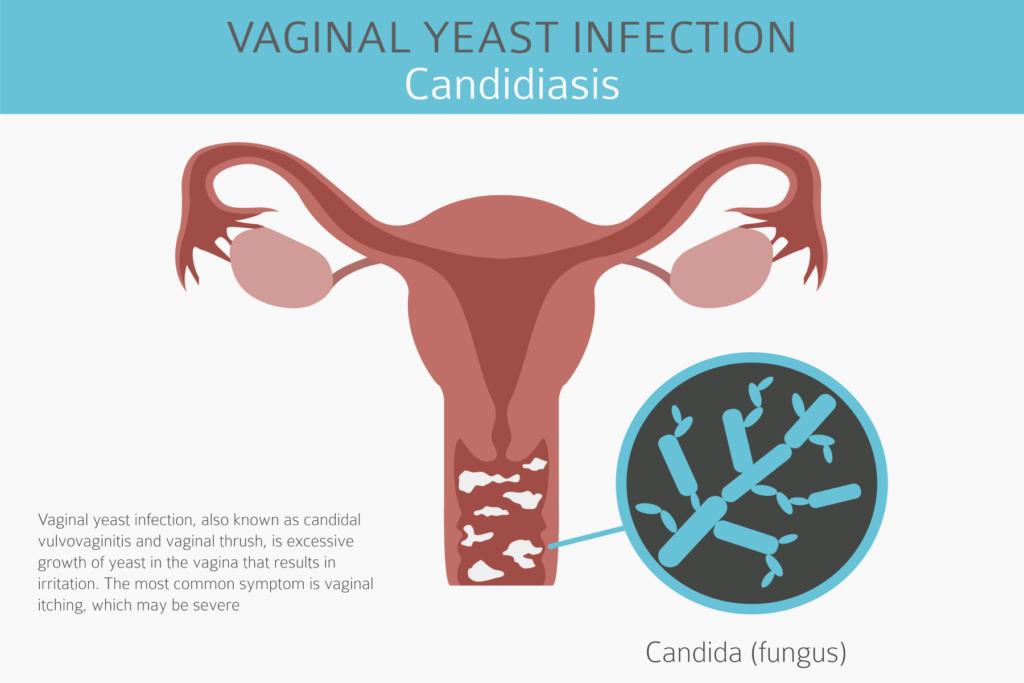
· Hormonal Changes: Puberty, menstrual cycles, illustration
· Hormonal Changes: Puberty, menstrual cycles, pregnancy, and menopause all shift hormone levels, which can encourage yeast growth.
· Antibiotics: They kill harmful bacteria but also the good bacteria that control yeast.
· Lifestyle: Wearing tight, synthetic underwear, staying in wet clothes (like gym wear), and using scented soaps or sprays can irritate the area and change its pH.
· Health Conditions: Uncontrolled diabetes (high sugar in bodily fluids feeds yeast) and conditions that weaken the immune system make overgrowth more likely.
· Diet: A diet high in sugar and refined carbs can promote yeast growth.
In short, the yeast is already there. It doesn’t take much for the internal scales to tip, making candidiasis a frequent visitor for women from teens to post-menopause.
What Happens If You Leave It Untreated for Too Long?
While occasional, mild yeast infections might sometimes resolve on their own, ignoring recurrent or severe symptoms can lead to complications:
· Chronic Discomfort & Skin Damage: Persistent itching and scratching can lead to raw, broken skin, making you vulnerable to secondary bacterial infections.
· Vulvovaginal Inflammation: Chronic inflammation can make the vulvar skin more sensitive and painful over time (a condition sometimes called vulvodynia).
· Increased Risk of STI Transmission: Inflamed, broken skin is more susceptible to picking up sexually transmitted infections.
· Complicated Candidiasis: Untreated, the infection can become severe, causing extensive redness, swelling, and cracks in the vaginal wall. It can also become recurrent (four or more times a year), which is much harder to manage.
Can It Affect My Male Partner?
Yes, it can. Although less common, men can get a yeast infection from unprotected sex with an infected partner. In men, it’s called balanitis (inflammation of the head of the penis). Symptoms include redness, itching, a burning sensation, and a rash. While often mild, it needs treatment with antifungal cream. Importantly, if a man has an infection, he can pass it back to his partner after she’s treated herself, leading to a frustrating “ping-pong” effect. Using condoms during treatment is wise.
The Big Concern: If an Affected Woman Delivers a Baby
This is a crucial point for expecting mothers. If a woman has an active yeast infection during a vaginal delivery, the baby can contract the fungus during birth. This is very common and usually manifests in the newborn as:
· Oral Thrush: White patches inside the baby’s mouth and on the tongue that can’t be wiped away easily. It can make feeding painful and difficult for the infant.
· Diaper Rash (Yeast Rash): A bright red, scaly rash in the diaper area that doesn’t respond well to typical diaper rash creams.
Both conditions are treatable with pediatric antifungal medications, but they can cause significant discomfort for your newborn. It’s always recommended to get any suspicious discharge treated before your due date to prevent this transmission.
The Takeaway: Don’t Just “Live With It”
Yeast infections are a common part of many women’s lives, but they are manageable and treatable. Listen to your body. If symptoms are new, severe, or keep coming back, please see a doctor or gynecologist. They can confirm it’s truly yeast and not another issue (like bacterial vaginosis or an STI) and help you find a long-term solution, especially if you’re pregnant.
Your vaginal health is a key part of your overall well-being. Paying attention to it, practicing good hygiene (without over-washing with harsh products), wearing breathable cotton underwear, and seeking timely medical advice can keep you—and your loved ones—much more comfortable.
Disclaimer: This blog provides general information for educational purposes only and is not a substitute for professional medical advice. Always consult with your healthcare provider for diagnosis and treatment.

Good
Nice blog
Sahi hai
Best
Very nice 👍
ATI sundar
Very good
Super 👍
Best
Bahut achcha
Mind blowing
Super 👍
Very nice
Accha hai Blog
Good Sir
Very nice 💯
Accha hai
Best