
Ascites: Understanding the Fluid Buildup in Your Abdomen
Meta Description
Comprehensive guide to ascites: causes, symptoms, organ complications, and treatments including allopathy, homeopathy, and Ayurveda. Learn about fluid management and root causes.
Keywords
ascites, abdominal swelling, liver cirrhosis, fluid retention, abdominal fluid, portal hypertension, ascites treatment, Ayurveda for ascites, homeopathy for ascites, diuretics, paracentesis
Ascites: When Your Abdomen Fills With Fluid
learn more from ICMR guidelines
Have you noticed your abdomen becoming progressively larger, tighter, and uncomfortable? Are your clothes fitting differently around the waist, or do you feel a sense of fullness and pressure? This could be more than just weight gain—it might be a condition called ascites (pronounced ah-SITE-eez).
Ascites is the medical term for the abnormal buildup of protein-containing fluid in the abdominal cavity. Think of it as your abdomen slowly filling with liquid, much like a balloon being filled with water. This condition is not a disease in itself but a significant symptom of an underlying health problem, most commonly related to the liver.
In this guide, we’ll break down everything you need to know about ascites in simple language: what causes it, what happens if it’s left untreated, and the various treatment approaches available—from conventional medicine to holistic systems like Ayurveda and Homeopathy.
mohfw guidelines and treatment of ascitis
What Exactly is Ascites? Understanding the “Why”
Your abdominal cavity is normally home to your digestive organs, with just a small amount of lubricating fluid present. Ascites occurs when this balance is disrupted, and several liters of fluid can accumulate. This buildup creates visible swelling, discomfort, and a feeling of heaviness.
The most common scenario (accounting for about 75% of cases) is due to liver cirrhosis[^1]. A healthy liver processes nutrients, filters blood, and makes proteins that regulate fluid. A scarred (cirrhotic) liver can’t do this effectively, leading to two main problems:
1. Portal Hypertension: Scar tissue blocks normal blood flow through the liver. This causes back pressure in the portal vein (the major blood vessel to the liver), forcing fluid to leak from the surface of the liver and intestines into the abdominal cavity.
2. Hypoalbuminemia: The damaged liver produces less albumin, a crucial protein that helps keep fluid in your bloodstream. Low albumin levels allow fluid to seep out into body tissues and cavities, including the abdomen.
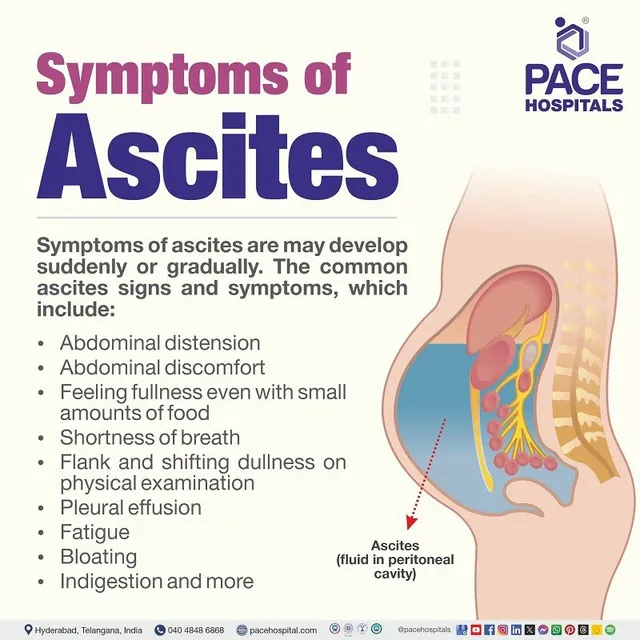
Image source pace hospitals symptoms of ascitis
Other Key Causes (Aetiology)
While liver cirrhosis is the leading cause, other conditions can also lead to ascites[^1][^2]:
· Heart Failure: A weak heart can’t pump blood effectively, causing pressure to build up in the veins (including those leading to the liver) and forcing fluid out.
· Cancers: Certain cancers, particularly ovarian, pancreatic, liver, and stomach cancers, can spread to the lining of the abdomen (peritoneum) and cause malignant ascites.
· Kidney Disease: Severe kidney problems, like nephrotic syndrome, can cause massive protein loss in urine and low blood albumin, similar to liver disease.
· Pancreatitis: Inflammation of the pancreas can lead to fluid leakage.
· Tuberculosis or Other Infections: Infections affecting the abdominal lining can cause inflammatory fluid buildup.
ascitis explained
The Domino Effect: What Happens If Ascites is Left Untreated?
Ignoring ascites is dangerous. The increasing fluid doesn’t just cause discomfort; it puts immense pressure on your internal organs and creates a cascade of complications:
· Breathing Difficulties: The upward pressure from the fluid can press on your diaphragm and lungs, making it hard to breathe, especially when lying down.
· Infection (Spontaneous Bacterial Peritonitis – SBP): The stagnant ascitic fluid is a perfect breeding ground for bacteria. An infection here, called SBP, is life-threatening and causes fever, abdominal pain, and confusion[^2].
· Hernias: The increased abdominal pressure can push your navel out (umbilical hernia) or cause hernias in the groin.
· Kidney Failure: Advanced cirrhosis with ascites can lead to hepatorenal syndrome, a type of progressive kidney failure.
· Malnutrition and Discomfort: The fluid causes early satiety (feeling full quickly), reducing food intake. The sheer weight and pressure lead to significant pain, mobility issues, and a reduced quality of life.
Navigating Treatment: From Conventional to Holistic
Treatment focuses on two goals: removing the fluid and managing the underlying cause.
1. Allopathic (Conventional) Medical Treatment
This is the first line of defense, especially in moderate to severe cases, and is crucial for immediate relief and managing complications[^1][^2].
· Dietary Changes (Low-Sodium Diet): This is the cornerstone. Reducing salt intake to less than 2,000 mg per day helps minimize fluid retention.
· Diuretic Medications: “Water pills” like spironolactone and furosemide help your kidneys remove more sodium and water from your body through urine.
· Therapeutic Paracentesis: For large, tense, or uncomfortable ascites, a doctor inserts a thin needle into the abdomen to drain the fluid. This provides rapid relief.
· Treating the Root Cause: The core treatment is always directed at the underlying disease—managing liver cirrhosis, treating heart failure, or providing cancer therapy.
· Surgical Options: In recurrent cases, procedures like TIPS (Transjugular Intrahepatic Portosystemic Shunt) create a bypass within the liver to reduce portal hypertension.
2. The Ayurvedic Perspective: Balancing the Doshas
Ayurveda views ascites as “Jalodara,” a type of abdominal disorder primarily caused by severe aggravation of Vata dosha and involvement of Kapha, which disrupts the digestive fire (Agni) and water metabolism[^3].
· Root Cause Approach: It links the condition to impaired digestion and metabolism, leading to the buildup of toxins (Ama) and imbalance in the body’s water-carrying channels (Srotas).
· Treatment Strategies:
· Deep Detoxification (Panchakarma): Procedures like medicated enemas (Basti) are considered primary treatments to cleanse the colon and balance Vata.
· Herbal Formulations: Diuretic and liver-strengthening herbs are used, such as Punarnava (Boerhavia diffusa), Gokshura (Tribulus terrestris), Katuki (Picrorhiza kurroa), and Kalmegh (Andrographis paniculata).
· Diet & Lifestyle: A strict, easily digestible diet warm, cooked foods, and avoidance of heavy, salty, or cold foods is prescribed. Gentle movement is encouraged.
3. The Homeopathic Approach: Individualized Symptom Relief
Homeopathy treats the individual, not just the disease. A homeopath selects a remedy based on the person’s unique physical and emotional symptom profile.
· Philosophy: It aims to stimulate the body’s self-healing mechanisms to address the underlying imbalance causing fluid retention.
· Common Remedies: These may include Apis Mellifica (for stinging pain, shiny skin), Arsenicum Album (for burning pain, anxiety, and restlessness), Carduus Marianus (for liver-related ascites), or Quassia (for ascites with marked bloating). The remedy must be prescribed by a qualified practitioner.
Important Considerations and The Path Forward
· Integration is Key: Ayurveda and Homeopathy can play a supportive role, especially in managing symptoms, improving digestion, and enhancing quality of life. However, for ascites due to serious conditions like advanced cirrhosis or cancer, conventional medical treatment is non-negotiable and potentially life-saving. Always inform all your healthcare providers about every therapy you are using.
· Addressing the Root: The most effective long-term strategy is aggressive management of the primary disease—be it alcohol cessation for alcoholic liver disease, antiviral therapy for hepatitis, or optimal management of heart failure.
Ascites is a clear signal from your body that a major system needs attention. By understanding its causes, respecting its potential dangers, and pursuing a coordinated treatment plan under professional guidance, you can manage this challenging condition effectively.
References
[^1]: National Institute of Diabetes and Digestive and Kidney Diseases (NIDDK). (2018). Cirrhosis. Retrieved from https://www.niddk.nih.gov/health-information/liver-disease/cirrhosis
[^2]:Runyon, B. A. (2013). Introduction to the revised American Association for the Study of Liver Diseases Practice Guideline management of adult patients with ascites due to cirrhosis 2012. Hepatology.
[^3]:Sharma, H., Chandola, H. M., Singh, G., & Basisht, G. (2007). Utilization of Ayurveda in health care: an approach for prevention, health promotion, and treatment of disease. Part 2—Ayurveda in primary health care. Journal of Alternative and Complementary Medicine.
Disclaimer
The information provided in this blog is for educational and informational purposes only and is not intended as a substitute for professional medical advice, diagnosis, or treatment. Ascites is a serious medical condition that requires prompt evaluation by a qualified healthcare provider, such as a gastroenterologist or hepatologist. Always seek the advice of your physician with any questions you may have regarding a medical condition. Do not disregard professional medical advice or delay seeking it because of something you have read here. Claims regarding Ayurvedic and Homeopathic treatments are based on traditional practices and holistic principles; individual results may vary and scientific evidence may be limited. Never stop or modify your prescribed medications without consulting your doctor.

Nice 👍
Nice 👍
Very good
Best