Understanding Testis, Testosterone, Spermatogenesis, Ovaries, and Puberty
Meta Description : Learn about the structure and functions of male gonads (testes), testosterone, spermatogenesis, ovaries, and puberty explained in simple layman’s terms. Discover the role of hormones, effects of castration, and long-term side effects.
Keywords: Testis, Testosterone, Spermatogenesis, Male Gonads, Ovaries, Puberty, Androgens, Castration Effects, Hormones, Reproductive Health
Introduction icmr guidelines on decented testis click here to read more
The human reproductive system is a fascinating and complex network of organs and hormones that ensure the continuation of life. In this blog, we will explore the male gonads (testes), the hormone testosterone, the process of spermatogenesis, the structure of ovaries, and the changes that occur during puberty. All explained in simple, layman-friendly language.
Structure and Functions of Male Gonads (Testes)
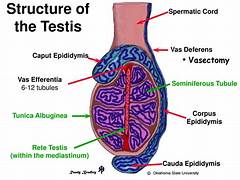
alt text structure of the testis
- The testes are oval-shaped organs located in the scrotum, outside the body cavity.
- Each testis is divided into compartments filled with seminiferous tubules, where sperm are produced.
- The Leydig cells found between these tubules secrete testosterone.
- Functions of testes:
- Sperm production (male gametes for reproduction).
- Hormone secretion (mainly testosterone).
- Temperature regulation (scrotum keeps testes cooler than body temperature, essential for sperm survival).
What is Testosterone? for more on mohfw detail
- Testosterone is the primary male sex hormone, classified as an androgen.
- It is produced mainly by the Leydig cells in the testes.
- Small amounts are also produced by the adrenal glands.
Functions of Testosterone (Androgens)
- Development of male reproductive organs.
- Growth of secondary sexual characteristics (deep voice, facial hair, muscle mass).
- Regulation of spermatogenesis.
- Maintenance of sex drive (libido).
- Influences bone density and red blood cell production.
Effects of Removal or Castration wikepedia on castration
- Castration means surgical removal of testes or loss of their function.
- Immediate effects:
- Loss of testosterone production.
- Infertility due to absence of sperm.
- Long-term effects:
- Reduced muscle mass and strength.
- Loss of body hair and deep voice.
- Increased risk of osteoporosis (weak bones).
- Emotional and psychological changes (low energy, depression).
Side Effects of Long-Term Testosterone Deficiency
- Fatigue and weakness.
- Decreased libido and erectile dysfunction.
- Mood swings and depression.
- Weight gain and metabolic changes.
- Reduced bone strength leading to fractures.
Spermatogenesis Explained
- Spermatogenesis is the process of sperm production inside the seminiferous tubules.
- Steps:
- Spermatogonia (stem cells) divide by mitosis.
- They form primary spermatocytes, which undergo meiosis.
- Meiosis produces haploid spermatids.
- Spermatids mature into spermatozoa (sperm cells).
- Entire process takes about 64–72 days.
- Controlled by hormones: FSH, LH, and testosterone.
Structure of Ovary
- The ovaries are the female gonads, located in the pelvic cavity.
- Each ovary has:
- Cortex (outer layer) containing follicles.
- Medulla (inner layer) with blood vessels and nerves.
- Functions:
- Production of ova (eggs).
- Secretion of female hormones (estrogen and progesterone).
Puberty and Its Changes
- Puberty is the stage when reproductive organs mature.
- In boys:
- Enlargement of testes and penis.
- Growth of facial and body hair.
- Voice deepening.
- In girls:
- Development of breasts.
- Menstruation begins.
- Growth of pubic hair.
- Hormones involved: Testosterone in boys, Estrogen and Progesterone in girls.
Conclusion
The male and female gonads play a central role in reproduction and overall health. Testosterone and other hormones regulate growth, fertility, and secondary sexual characteristics. Understanding these processes helps us appreciate the importance of reproductive health.
Disclaimer
This blog is for educational purposes only. It explains reproductive health in simple terms for general awareness. It should not be taken as medical advice. For any health concerns, always consult a qualified healthcare professional.