Meta Description:
“Empty mind is devil’s brain” — to all youth in India, whether in remote villages or urban towns: a degree alone isn’t the answer. This blog lays out a practical plan for students of classes 10–12 and BCA/MCA, emphasising skills, will-power, attitude, discipline and self-responsibility in today’s job-market and beyond.
Keywords:
Indian youth employment, skill development India, youth under-employment India, BCA career plan, MCA career plan, class 12 student career India, skill-based employment India, degree vs skills India
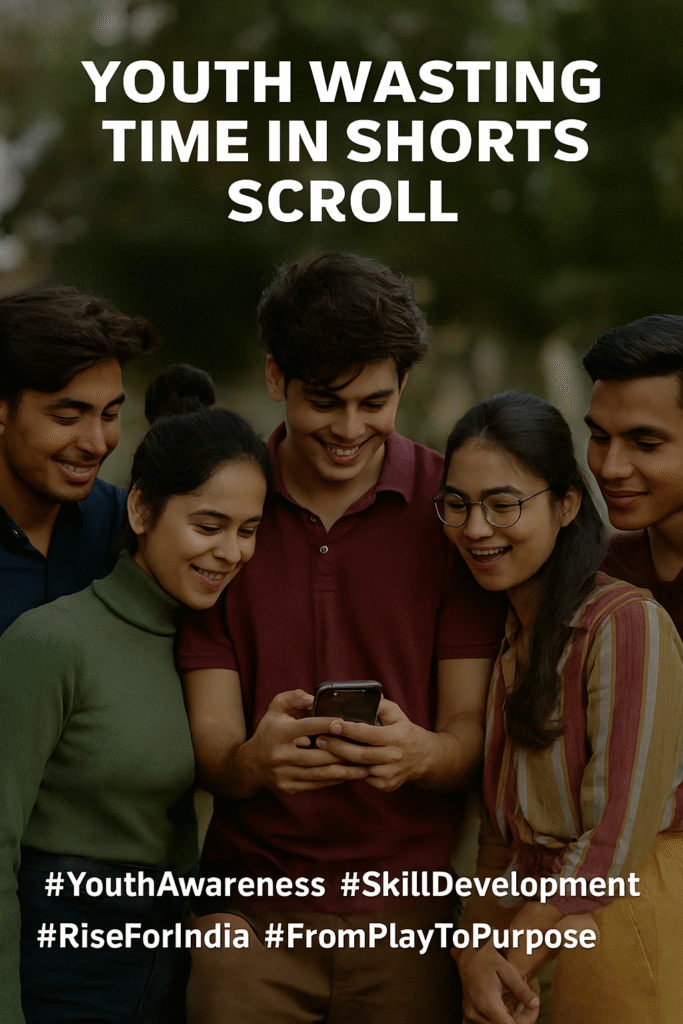
A Wake-Up Call to Our Youth
In many remote Tamil villages, folks say: “Empty mind is devil’s brain” — meaning if you don’t fill your mind with purpose and vigour, negativity creeps in. They also say: “Empty stomach kills inspiration & devastates life dreams.” That’s not just about hunger; it’s a metaphor for when ambition, effort and opportunity go missing.
Imagine a blank printer cartridge: you press “print” and only blank sheets come out. That’s what happens when you have a degree — say a BCA or MCA — but your mind cartridge is empty: no real skills, no experience, no practical mindset. Many young Indians finish a computer science degree (or similar) and end up like vagabonds in a tough job-market: restless, frustrated, depressed. Some fall prey to wrong influences; a few even land in jail.
External link -Ministry of youth affairs and sports Read more click here
Let’s face it: India’s future won’t be built just on paper certificates anymore. Degrees matter less than skills, will, attitude, determination, discipline, self-responsibility and consistent action. The world of work is changing fast — and you must change with it.
So here’s a practical plan, for:
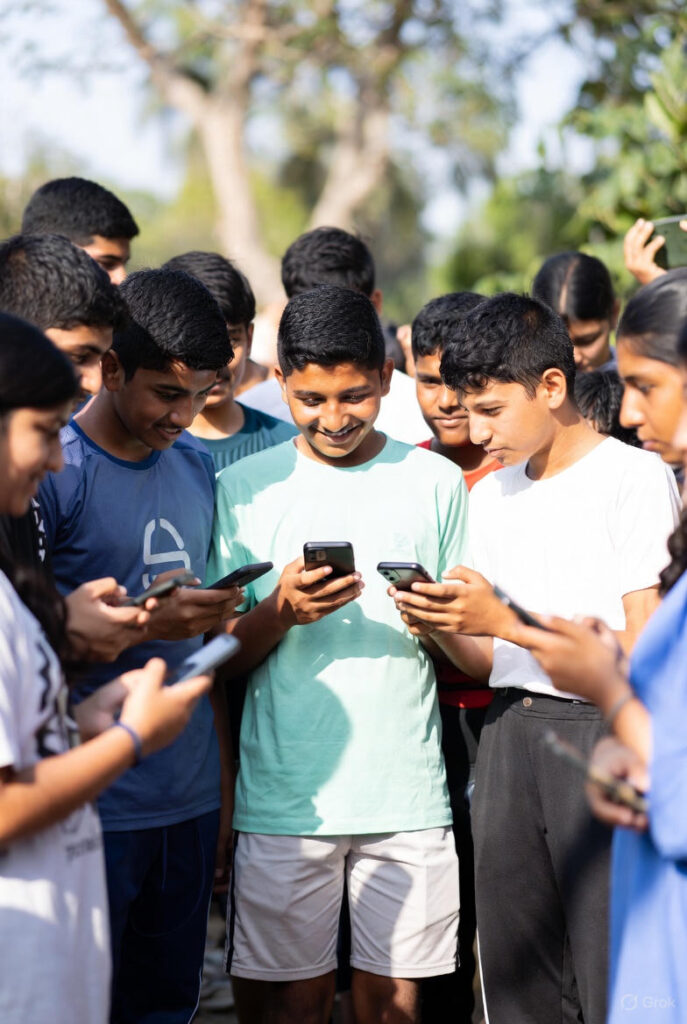
alt text-INDIAN YOUTH SCROLL AND WASTE TIME ON SCROLLIG MOBILE VULGAR SHORTS
- Class 10, 11 & 12 students
- BCA & MCA students (or similar Computer Science/IT degrees)
to help you navigate despite financial pressure, unemployment or under-employment. This is about making yourself employable, entrepreneurial, resilient — so you don’t just survive, you thrive.
External link for more reading click to know Govt programs
1. Accept the New Reality: Skills Over Certificates
The Indian Government and experts alike stress that training in saleable skills matters more than simply degrees. For example:
- The platform Pradhan Mantri Kaushal Vikas Yojana (PMKVY) was created to register training and certification of youth skills.
- Reports show that while youth unemployment remains a challenge, equipping youth with industry-aligned skills elevates their employability.
What this means for you:
- If you’re doing Class 12 (or about to), don’t just think “get admission in college”. Think: what skills can I develop right now?
- If you have a BCA or MCA (or are doing one), don’t assume jobs will automatically come. You must build hands-on skills, projects, internships, self-learning.
- Your mindset: become someone who adds value, not someone who only shows a certificate.
2. Start Early: For Class 10-12 Students
Even if you are in Class 10, 11 or 12, you have a huge advantage: time. Use it wisely — don’t wait until the semester is over.
Actionable steps:
- Choose subjects mindfully
- If you’re in a science/IT stream, focus on computer fundamentals, programming basics, algorithms, databases.
- If you’re in arts/commerce, pick up digital tools, basic data-skills, communication, English proficiency.
- Don’t just chase “prestige” streams; chase what interest you and what the job-market needs.
- Learn one “mini-skill” alongside your studies
- For example: basic web-design (HTML, CSS, JavaScript) or creating mobile-friendly apps.
- Or: graphic design + digital marketing + content creation.
- Dedicate maybe 30–60 minutes daily for 3-6 months. Build a small “mini-project” (a website, a blog, a small game). This becomes your “proof of work”.
- Internships / projects / volunteering
- Even in your school years, try online internships (many platforms offer short ones) or volunteer in local organisations (set up a website, social-media page).
- These count — they show action, not just “studying”.
- Soft-skills + discipline
- Your mindset, attitude, discipline matters. If you practise reading for 20 minutes daily, coding for 40 minutes, maintaining a schedule, you build habit-muscle.
- Communication (especially English) is often the weak link for many students in India. Strengthen it.
- Financial awareness
- If your family faces financial pressure: don’t despair. Speak with your mentors, teachers. Find scholarships, online free courses (for languages, coding, design). Government portals like Skill India Digital Hub provide free/up-skilling options.
3. For BCA / MCA (and similar) Students: Bridge the Gap
You have a degree or you are doing one. Good. But let’s fill the gap between “degree done” and “job ready”.
Key actions:
- Choose a specialisation
- Within “computer science / IT” there are many paths: web-development, mobile apps, data analytics, artificial intelligence/machine learning, cloud computing, cybersecurity, full-stack dev, DevOps.
- Pick one primary and one secondary. For instance: Primary = Web/Full-Stack; Secondary = Data Analytics.
- Focus your projects around that.
- Build a strong portfolio
- Create 2-3 real projects (not just assignments): e.g., a web-app, a mobile-app, a database-driven service.
- Host them (GitHub, live website). Have your own domain if possible (cheap).
- Make your CV plus a portfolio link that shows you did something.
- Internships / Apprenticeships
- Get real-world exposure. Even small stipend or unpaid interns count: you learn workflow, team-work, code reviews, version control.
- Government schemes encourage apprenticeships and industry alignment.
- Use networks (college alumni, LinkedIn, GitHub communities) to find opportunities.
- Continuous learning & certification
- After your degree, keep learning: online courses (Coursera, edX, Udemy), free modules (Skill India Digital Hub) in your chosen specialisation.
- Certification isn’t everything, but it’s useful. More importantly: demonstrate work.
- Stay updated: technology changes fast. If you stop learning, you fall behind.
- Soft skills + attitude
- Technical ability alone isn’t sufficient. Employers value: communication, teamwork, discipline, punctuality, problem-solving attitude.
- Show up prepared for interviews: know your projects, know the basics, know “why this specialisation”, know how you can add value.
- Explore entrepreneurship / freelancing
- If jobs are hard to find, consider freelancing: small clients (local businesses, NGOs) who need websites/apps. You can start from home.
- Or combine skills + passion: build a small product, a local service, an app that caters to your village/town’s need.
- Remember: India needs job-creators, not only job-seekers.

Alt Text: This above image shows how global youth engaged in scrolling mobile shorts
4. Mindset, Attitude & Discipline: Your Hidden Super-Power
No matter how good you are, without the right mindset you won’t sustain. Here’s how to build that:
- Will + hunger: Remind yourself daily: “I will learn today, I will produce today, I will grow today.”
- Continuous action: Small consistent steps beat huge bursts and pausing. Imagine 30 minutes coding every day for a year = 182.5 hours.
- Responsibility: Don’t blame “the market”, “lack of jobs”, “degree unfairness”. Take responsibility: “What can I do better? What value do I add?”
- Discipline: Set a schedule — even if you’re working part time or studying full time. Block out “skill-learning time”.
- Good attitude: Be humble, be teachable. Show curiosity. Employers and clients love someone who is eager, well-mannered, and delivers.
- Duty to self & family: You may be under financial pressure. Use that as fuel, not an excuse. Every small improvement you make lifts you and lifts your family.
5. Roadmap Summary: Step-by-Step
Here’s a combined roadmap for the two categories (Class 10-12 & BCA/MCA) so you can pick your starting point and move ahead.
| Stage | Week 1-4 | Month 2-6 | Months 7-12 | Year 2 & beyond |
| Class 10-12 | Choose stream carefully. Start one mini-skill. | Build mini-project. Develop soft skills. Intern/Volunteer. | Prepare for + join small cert/online course. Explore freelancing/local work. | Align with college/degree plans + keep building skills portfolio. |
| BCA/MCA | Choose specialisation. Start portfolio projects. | Internship/apprenticeship. Build 2-3 strong projects. | Online advanced courses. Freelancing/entrepreneurship. LinkedIn/GitHub presence. | Job search + growth path (senior dev, team lead) OR start own venture/service. |
6. Government & Scheme-Support: Use It!
You are not alone. The Indian Government and many programmes recognise the skill-gap challenge.
- The Skill India Digital Hub helps connect skilling, education, employment & entrepreneurship.
- The National Skill Development frameworks emphasise aligning youth skills with industry demand.
- For rural youth especially, schemes like Deen Dayal Upadhyaya Grameen Kaushalya Yojana (DDU-GKY) aim to transform youth into globally-relevant workforce.
What you must do:
Register for available free/low-cost skill-training programmes. Keep watching your college/university for tie-ups. Attend job-fairs, skill-fairs, boot-camps. Don’t wait passively.
7. Words to the Village Youth & Urban Youth Alike
If you come from a remote village, you may face extra hurdles: fewer mentors, less exposure, financial constraints. But you also have qualities: grit, community support, hunger to change. Use those.
If you are in an urban setting, you may have more access but also more distractions and more competition. You must still stand out.
In either case:
- Don’t fall into trap of “degree done, job will come”.
- Don’t drift; wander; just relax and wait.
- Don’t give up when a job doesn’t come day one. Instead, pivot, adapt.
- Don’t fall into negative company. Surround yourself with positive influences.
- Don’t believe that “this is the only path”. You can carve your path — digital, remote, freelancing, entrepreneurship, local service.
8. A Final Call: Build India’s Future
You are the generation that can make India future-ready. Not because degrees will do it—but because you will do it. Your skill, your attitude, your discipline. India’s future will depend on self-responsible, skilled, determined young people who don’t wait for jobs—they create value, seek growth, make change.
Take this plan today. Decide:
- what skill I will learn now
- what project I will complete by month 3
- how I will build my portfolio
- how I will gain experience (internship/freelance)
- how I will improve my communication, discipline, mindset
And then… do it. Day by day. Small step by small step.
Disclaimer:
This blog provides general guidance only. Individual outcomes will vary depending on personal circumstances, degree of effort, local opportunities, and economic conditions. Before making any major career decision, students and families should also consult school counsellors, college career services, local skill-development centres and, where possible, industry professionals. The author and publisher do not guarantee job placement or income, and are not liable for any specific result or unemployment that may occur.
Internal link for similar wake up alert blog visit https://cordcraft.in