Breaking the Chains: Ending Casteism for a Stronger India
Category: Social Reform | Indian Society | Equality & Development
Tags: India, Casteism, Social Justice, Manusmriti, Equality, Development, Reform, Constitution
Author: Editorial Blog
Published: May 21, 2026
Introduction
India is one of the oldest civilizations in the world. It is the land of knowledge, spirituality, science, culture, and diversity. Yet, despite its greatness, India still struggles with one deep-rooted social problem — casteism.
For centuries, caste divisions have silently weakened the nation. They have created walls between people who should have stood together as one family. While India has progressed in technology, education, and economy, the shadow of caste discrimination still slows our development.
Many social thinkers believe that the rigid caste hierarchy became deeply structured through texts such as the Manusmriti, traditionally attributed to Manu. Over time, these ideas influenced social practices, though interpretations and historical debates about their application continue among scholars.
The real question today is not about blame. It is: How can India rise above caste barriers and build a united future?
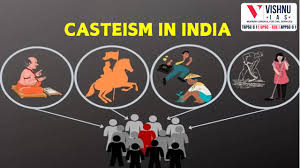
it illustrates caste conflicts in india
https://cordcraft.in for more reading
How Casteism Became an Obstacle
Casteism divides society into superior and inferior groups based on birth rather than ability.
This creates several harmful effects:
1. It Destroys Equality
A child is not born with caste; society gives that label. When opportunities are decided by birth instead of talent, true equality dies.
This prevents millions from reaching their full potential.
As Dr. B. R. Ambedkar said:
“Caste is not merely a division of labour; it is a division of labourers.”
This means caste divides people themselves, not just their work.
2. It Weakens National Unity
When people identify more with caste than with the nation, unity suffers.
A country grows when citizens work together, not when they see each other as higher or lower.
History shows that internal divisions make nations weak. Social fragmentation slows collective progress.
3. It Blocks Talent and Progress
India has brilliant minds in every village and town.
But if a talented person is denied education, dignity, or opportunity because of caste prejudice, the whole nation loses.
Development depends on using every citizen’s ability.
4. It Creates Social Hatred
Caste discrimination often leads to humiliation, exclusion, and violence.
Hatred creates fear, and fear stops social trust.
Without trust, democracy becomes weak.
The Constitution of India guarantees equality under Article 14 and prohibits discrimination under Article 15.
Did Manusmriti Create This Problem?
The Manusmriti is often criticized for describing a rigid social order based on varna.
Some verses are viewed as supporting inequality and restricting rights based on birth.
However, many scholars argue that:
- It was one of many ancient legal texts
- Society changed over centuries
- Modern India is governed by the Constitution, not ancient law books
The real challenge is not only old texts but also old mindsets that continue to survive.
A book alone cannot control society forever. People’s thinking does.
How Can India Eradicate Casteism?
Change is possible. India has already changed greatly.
Here are practical solutions:
1. Education Must Teach Equality
Schools should teach children:
- Every human being has equal dignity
- Character matters more than birth
- Respect is universal
When children learn equality early, prejudice fades naturally.
2. Stop Asking Caste in Daily Life
Many social divisions continue because caste is constantly discussed in marriage, politics, jobs, and social identity.
If we stop making caste the first question, society will slowly change.
Ask instead:
“What is your dream?”
not
“What is your caste?”
3. Encourage Social Mixing
Shared schools, workplaces, friendships, and marriages reduce barriers.
Real unity grows through human connection.
When people know each other personally, prejudice disappears.
4. Follow the Vision of Great Reformers
India has produced powerful voices against caste discrimination:
- B. R. Ambedkar
- Jyotirao Phule
- Savitribai Phule
- Mahatma Gandhi
Their lives teach courage, education, and social justice.
5. Practice Humanity Above Identity
Religion, caste, language, and region should never become bigger than humanity.
India’s ancient spiritual wisdom teaches:
“Vasudhaiva Kutumbakam”
(The world is one family)
If we truly live this value, caste walls will collapse.
Conclusion
India’s future does not lie in caste pride.
It lies in human dignity.
The chains of casteism can be broken — not by anger, but by awareness, education, compassion, and constitutional values.
A developed India is not just about highways, technology, or GDP.
A truly developed India is where no child feels inferior because of birth.
The dream of a stronger India will become reality when every Indian proudly says:
“My identity is not my caste. My identity is my character, my work, and my humanity.”
That day, India will not just rise economically.
It will rise morally and spiritually before the world.
References
- Constitution of India, Government of India
- Encyclopaedia Britannica: Dr. B. R. Ambedkar
- United Nations Human Rights Charter
- Historical studies on Manusmriti and Indian social reform movements