The Hidden Column: How Your Spine Navigates Gravity, Life, and Paralysis
Tags: Spinal Cord Anatomy, Neurology, Human Biology, Comparative Anatomy, Paralysis Awareness, Spinal Health, Neurodegenerative Diseases, Trauma Science
Category: Science & Health
We often think of our backbone as just that—a bony column that keeps us upright.
But hidden within its protective tunnel of vertebrae lies one of nature’s most profound masterpieces: the spinal cord.
This delicate, glistening cable is the superhighway of your nervous system, a direct line from your brain to your body.
Yet, how does it compare to our animal cousins? And why is this human design both a marvel of evolution and a point of vulnerability?
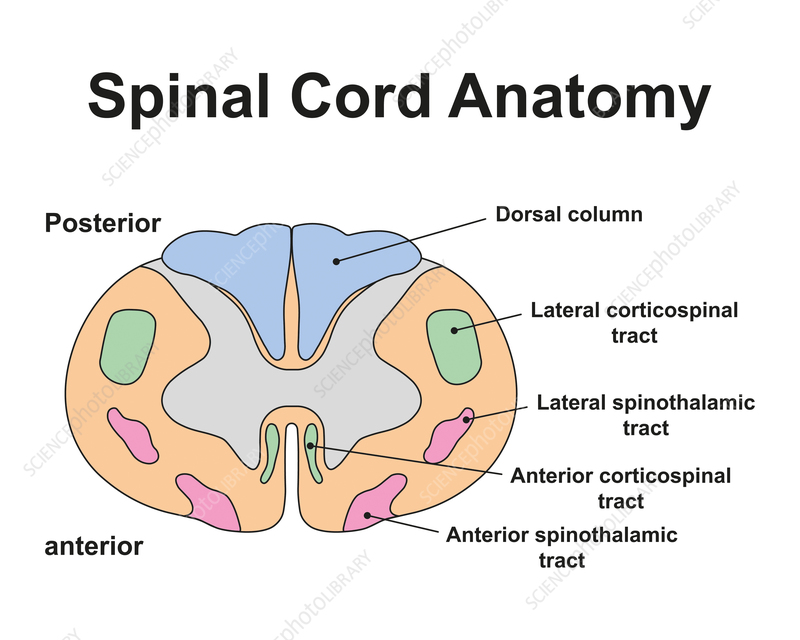
The Anatomical Blueprint: A Tale of Two Cords
At its core, the anatomy is surprisingly consistent across mammals.
The spinal cord is a tubular bundle of nerves, roughly the thickness of your little finger, extending from the base of your brain down your back. It’s wrapped in protective membranes (meninges) and bathed in cerebrospinal fluid.
Nerves branch out between the vertebrae like on-ramps and off-ramps, carrying signals to and from every corner of your body.
But here’s where human and animal spines diverge dramatically due to one force: gravity’s equilibrium.
An animal like a dog or a cat has a spine that runs roughly parallel to the ground. It acts like a suspension bridge, with the spinal cord running through it, balanced under the pull of gravity. Their “horizontal engineering” is optimized for weight distribution on four legs.
Humans, however, made a daring evolutionary trade-off. We stood up. Our spine became a vertical, weight-bearing pillar, a stack of 24 bones (vertebrae) with delicate shock-absorbing discs in between.
This S-shaped curve is our ingenious solution to gravitational equilibrium—it allows us to balance our heavy skull, absorb impact from walking, and maintain an upright posture.
But this verticality places immense, constant mechanical stress on the structure housing our precious cord.
The Metabolic Powerhouse and Its Silent Work
Don’t be fooled by its silent operation. The spinal cord is a metabolic furnace. Its billions of nerve cells (neurons) and their supporting glial cells demand a constant, rich supply of oxygen and glucose.
A sophisticated network of blood vessels lines its length, fueling the relentless transmission of electrical and chemical signals.
A sneeze, a step, the feeling of sun on your skin—every command and sensation travels this neural expressway at speeds over 250 miles per hour.
This high metabolism, however, is a double-edged sword. It makes the cord exquisitely sensitive to any disruption in its blood supply. Even a few minutes of compromised oxygen can cause catastrophic damage.
When the System Fails: Disease and Trauma
Our upright, complex spine is prone to a unique set of challenges:
1. The Wear and Tear of Upright Life:
· Degenerative Disc Disease: Those shock-absorbing discs dry out and shrink with age, a common consequence of our vertical load.
· Spinal Stenosis: A narrowing of the bony canal, often from arthritis, that can pinch the cord itself.
· Herniated (“Slipped”) Disc: When a disc’s soft center pushes out, it can press on spinal nerves, causing pain, numbness, or weakness.
2. The Catastrophic Event: Trauma
This is the most dramatic cause of spinal cord injury (SCI). A car accident, a severe fall, a sports impact—any event that forcibly fractures, dislocates, or compresses the vertebrae can crush, tear, or sever the delicate cord within.
Unlike nerves in your periphery, the spinal cord has very limited ability to regenerate. The damage is often permanent.
The Cause of Paralysis: A Communication Breakdown
Paralysis isn’t an injury to muscles; it’s a severing of the communication line. The cord is organized in segments. Each controls and receives information from specific body regions.
· Cervical (Neck) Injury: Affects arms, trunk, and legs. High injuries (C1-C4) can impair breathing, requiring ventilators—this is quadriplegia (tetraplegia).
· Thoracic (Chest) Injury: Usually results in paraplegia—paralysis of the lower body, with often intact arm and hand function.
· Lumbar/Sacral (Lower Back) Injury: Affects hips, legs, and bowel/bladder function.
The site of the injury determines everything. A clean severance means complete loss of function below the level. More common are contusions (bruising) or compressions, which may allow for some incomplete function.
Nature’s Trade-Off: A Price for Standing Tall
In the animal kingdom, spinal injuries are often fatal—a creature that can’t move can’t survive in the wild.
Our human medical advances allow survival, but we live with the consequences of our upright design.
Our vertical spine gave us free hands, vast horizons, and the ability to look to the stars. But it left our central neural cable vulnerable to the very gravity it masters.
The human spinal cord is thus a symbol of both our fragility and our resilience. It is the physical core of our experience, the seat of motion and sensation.
Understanding its intricate anatomy and its delicate balance with gravity isn’t just a lesson in biology—it’s a lesson in what it means to be human.
By researching regeneration, improving rehabilitation, and practicing prevention (like safe driving and sports), we honor this incredible structure and work to protect the vital connection that lets us live, feel, and move through our world.