
· Title: The Mind-Brain-Body Triangle: An Ancient Vedic View for Modern Healing
· Meta Description: Explore the deep connection between mind, brain, and body. Discover how 3000-year-old Vedas and Upanishads explained consciousness, and how modern science, led by pioneers like Dr. Swamy, is validating these ancient truths for holistic health.
· Keywords: mind-body connection, Ayurveda, consciousness, Upanishads, Vedas, brain function, holistic healing, psychoneuroimmunology, Dr. Swamy, Ayurvedic medicine, modern science and spirituality
· Tags: #MindBodySpirit #Ayurveda #Consciousness #HolisticHealth #VedicScience #Upanishads #Healing #Wellness #Meditation #Neuroscience
keep learning more internal link
Disclaimer: This article is for informational purposes only and is based on ancient Vedic texts and integrative research. It is not intended as a substitute for professional medical advice, diagnosis, or treatment. Always seek the advice of your physician or other qualified health provider with any questions you may have regarding a medical condition.
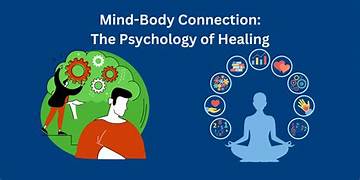
mind brain and body ancient healing deailed artcles illustration
The Mind-Brain-Body Triangle: An Ancient Vedic View for Modern Healing
We live in an age fascinated by the inner workings of ourselves. We can map the brain, transplant organs, and decode DNA. Yet, a fundamental mystery remains: what is the mind? We know our body is a collection of organs working in perfect harmony to sustain life. The brain, a visible, tangible organ, sits at the helm of this complex system. But the mind—the unseen force behind our thoughts, emotions, laughter, and tears—eludes a physical address. Where is it? How does it interact with the brain to influence our health, especially when the body is under siege, like from cancer, and the brain’s conventional role seems to falter?
Surprisingly, some of the most profound answers to these modern questions were contemplated over 3000 years ago in the ancient texts of India: the Vedas and the Upanishads. These scriptures did not have fMRI machines, but they possessed deep, contemplative insight into the nature of consciousness, offering a sophisticated model of the mind-brain-body triangle that is remarkably relevant today.
The Vedic and Upanishadic Blueprint: Beyond the Physical Brain
The Vedas, and particularly the philosophical Upanishads, present a layered understanding of human existence. They move beyond a purely biological view to describe a multi-faceted being. The physical body, or Annamaya Kosha (the “food sheath”), is just the outermost layer. It is the embodiment of matter, the vehicle we can see and touch.
But within this resides a subtler apparatus: the mind. The Upanishads describe the mind (Manas) not as the brain itself, but as an instrument that interfaces with it. The mind is part of the Manomaya Kosha (the “mental sheath”). It is the faculty responsible for thinking, reasoning, doubting, and processing sensory input. It’s the internal dialogue, the seat of our emotions.
Where does the brain fit in? In the Vedic view, the brain is the physical hardware through which the software of the mind operates. It is the intricate receiver and processor for the commands of the mind. But the mind itself is subtler than the brain. This explains why, when you think of a loved one, your brain fires specific neurons, but the feeling of love itself has no mass or location. It is a quality of the mind, expressed through the brain and felt in the body (e.g., a warm feeling in the chest).
The Supreme Witness: The Consciousness Behind the Mind
The most revolutionary concept in the Upanishads is the introduction of a principle even beyond the mind: Atman, or the pure consciousness. This is described in the Mandukya Upanishad, which analyzes the states of consciousness—waking, dreaming, and deep sleep. In deep sleep, the mind is inactive, the brain is in a low-activity state, and yet, we wake up and know we slept peacefully. Who is that knower? The Upanishads posit it is the Atman, the silent, unchanging witness.
This creates a clear hierarchy:
1. Body (Annamaya Kosha): The physical vessel, including the brain.
2. Mind (Manomaya Kosha): The subtle instrument of thought and emotion.
3. Intellect (Buddhi): A higher aspect of the inner instrument, responsible for discernment and decision-making.
4. Consciousness (Atman): The fundamental, formless awareness that enlivens the entire system.
This model elegantly explains how the mind can influence the body. A troubled mind (anxiety) can disrupt the intellect’s judgment and create physical symptoms in the body (high blood pressure, digestive issues). Conversely, a calm mind, rooted in the stability of pure awareness, can promote physical healing.
The Mind’s Role in Healing When the Body is Ill
This brings us to the critical question: when the body is afflicted with a severe illness like cancer, where the brain’s physical control seems “nil,” what is the mind’s role?
The Vedic answer is that the mind’s role becomes paramount. If the disease has manifested in the physical body (Annamaya Kosha), its seed often lies in the imbalances of the mental and intellectual sheaths (Manomaya and Vijnanamaya Kosha). Stress, unresolved trauma, and negative emotional patterns create a biochemical environment—through hormones like cortisol—that can suppress the immune system and foster disease.
Healing, therefore, is not just about attacking the physical symptoms. It must involve addressing the mental and emotional terrain. Practices like meditation, pranayama (breath control), and chanting, prescribed in the Vedas, are designed to calm the mind, quiet the internal chatter, and connect the individual with the deeper, healing resource of pure consciousness (Atman). When the mind settles, the body’s innate intelligence and self-repair mechanisms (concepts akin to Ojas and Prana in Ayurveda) are empowered to function optimally.
This is not mere philosophy; it is the foundation of Ayurveda, the sister science of the Vedas, which means “the science of life.” Ayurveda has always treated the person, not the disease, understanding that true health is a vibrant state of balance between body, mind, and spirit.
Bridging the Gap: Dr. Swamy and the Integration of Ancient Wisdom and Modern Science
For centuries, this ancient knowledge remained largely philosophical. Today, a growing body of scientific research is validating these timeless principles. A key figure in this integration is Dr. Swamy, whose work has been instrumental in building a bridge between modern scientific research and age-old Ayurvedic health awareness.
Dr. Swamy’s contributions lie in demystifying Vedic concepts through the lens of contemporary science. He has extensively explored how:
· The concept of Prana (life force) correlates with bioenergetics and the body’s mitochondrial energy production.
· Meditation’s impact on the mind, as described in the Upanishads, is now measurable through EEG and fMRI studies showing increased grey matter, reduced activity in the amygdala (the fear center), and enhanced connectivity in the brain.
· The Ayurvedic principle of the three Doshas (Vata, Pitta, Kapha) provides a framework for understanding individual biochemical and psychosomatic constitutions, which aligns with the modern fields of genomics and personalized medicine.
By articulating the Vedic mind-body model in the language of psychoneuroimmunology (the study of how the mind influences the immune system) and epigenetics (how behavior and environment influence gene expression), Dr. Swamy has helped create a credible, evidence-based platform for holistic health. His work shows that when a patient with a physical illness also receives mental and emotional support—addressing the Manomaya Kosha—the outcomes can be significantly improved. This is the practical application of the 3000-year-old triangle: healing the body by first calming the mind and connecting to the inner source of stability and awareness.
Conclusion
The ancient sages of the Vedic era possessed a profound understanding of the human condition. They saw the mind not as a byproduct of the brain, but as a powerful, subtle force that uses the brain and body as its instruments. In their view, the ultimate healing power lies in accessing the silent consciousness that underlies all. As modern science continues to catch up with this ancient wisdom, pioneers like Dr. Swamy are ensuring that this holistic knowledge is not lost but integrated, offering us a more complete and compassionate path to health—one that honors the inseparable triangle of mind, brain, and body.
—
Citation References
1. The Principal Upanishads by S. Radhakrishnan. HarperCollins Publishers.
2. A Comprehensive Guide to the Mandukya Upanishad by Swami Rama. Himalayan Institute Press.
3. Ayurveda: The Science of Self-Healing by Dr. Vasant Lad. Lotus Press.
4. Psychoneuroimmunology: Science and Practice (Various Authors). Academic Press.
5. Research publications and lectures by Dr. M.S. Swamy on Integrative Medicine and Ayurvedic Biology (Representative examples can be found through institutions like the California College of Ayurveda or the World Academy of Ayurveda).

Super
Nice 👍
Good 👍
Very very nice
Best of best
Super se super
Kipidap
Nice blog
Accha laga Blog
Mast
Super 😊
Very good 💯
Very nice
Great 👍