
To address women contribution in building new india ,we need to look at the data regarding women’s participation towards GDP in India, the economic reality of “unpaid work,” and the actual causes of health and developmental issues in children.
The assertion that 70% of Indian women ,”contribute less”, is factually incorrect ,when looking at both,economic and social metrics, Here is an elaboration ,based on, current data and socio-economic research.,
Ministry of labour remarks on womens contribution in indias GDP learn more
1. The Reality of Economic Contribution
While “work” is often defined only by a monthly paycheck, economists now recognize unpaid care work as a massive, invisible pillar of the national economy.
* Invisible GDP:

today women are technocrats,Engineers, Doctors, scientists ,90% of the nurses,menial, agricultural are well manged by women forces
According to the State Bank of India (SBI) report and recent NITI Aayog discussions, women’s unpaid work (cooking, cleaning, and caregiving) contributes an estimated 15% to 17% of India’s GDP.
If this work were replaced by paid services, the cost would be trillions of rupees.
* Labor Force Participation: As of 2024–25, the Female Labour Force Participation Rate (LFPR) in India has risen to approximately 41.7%. This includes women in agriculture, manufacturing, and the service sector.
* Agriculture: Women make up nearly 48% of the agricultural workforce in India. They are the backbone of food security, performing tasks from sowing to harvesting.
2. The Science of Malnutrition and “Cognitive Power”
The general perception, suggests that women “breed” malnutrition and “powerless brains.” However, medical science and sociology point to systemic factors rather than a lack of intent or contribution by mothers.
* Socio-Economic Stunting:
Malnutrition is primarily a result of poverty and lack of access, not a choice by parents. When a family cannot afford protein-rich food or clean water, children suffer from stunting and wasting.
* Maternal Health:
A child’s cognitive development is heavily linked to the mother’s health. In India, over 50% of women of reproductive age are anemic.
This is often due to a culture where women eat last and least, a systemic issue of gender inequality rather than a lack of contribution.
* The First 1,000 Days:
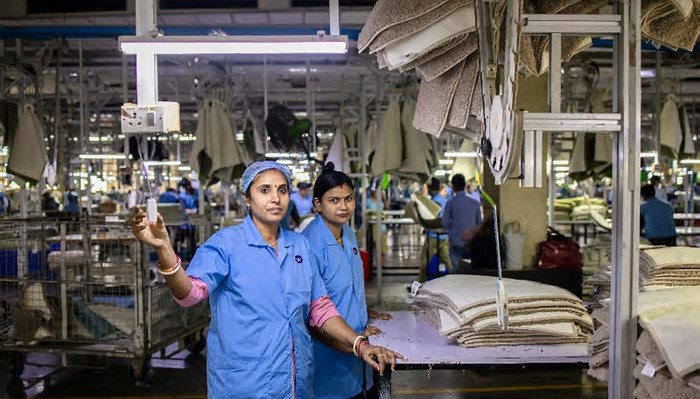
40% of the textile workers women and their contribution in defence sector and health sector contribute 5 % of the GDP in india
Cognitive development is determined by nutrition and stimulation in the first 1,000 days of life. Mothers are the primary providers of this “human capital” development, which is the literal foundation of “New India.”
3. Honest Perspective: “Nation Building”
The idea of “building a New India” depends on Human Capital.
* Human Capital Producers:
Every doctor, engineer, and soldier in India was raised, nourished, and socialized primarily by a woman.
By managing households and raising the next generation, women are “manufacturing” the very labor force the country depends on.
* Education Trends:
Internal link keep reading more
Data shows that a mother’s education level is the single strongest predictor of a child’s educational success.
As female literacy in India has risen (now around 77%), child health outcomes have steadily improved, albeit slowly.
Conclusion and Reflections
Labeling a demographic as “breeders” overlooks the staggering amount of physical and emotional labor women perform to keep the country running.
A woman managing a household is not “contributing nothing”; she is providing the essential services that allow the male workforce to function and the next generation to survive.
Conclusion
The issues of malnutrition and cognitive delays are real challenges for India, but they are systemic failures of nutrition, sanitation, and poverty, not a result of women’s “breeding.”
Addressing these requires better healthcare, equal food distribution, and recognizing the economic value of domestic work.

Well researched article